


THANK YOU FOR SUBSCRIBING
Weekly Brief
Be first to read the latest tech news, Industry Leader's Insights, and CIO interviews of medium and large enterprises exclusively from Healthcare Tech Outlook
A featured contribution from Leadership Perspectives: a curated forum reserved for leaders nominated by our subscribers and vetted by our Healthcare Tech Outlook Advisory Board.

Fresenius Medical Care
Enhancing Access to Healthcare with the Power of Remote Technologies
Niklas founded two startup companies and is currently working at Fresenius Medical Care. He has more than 8 years’ experience in digital. Niklas blends entrepreneurial spirit, human-centered design and business acumen within the complex healthcare space. In his current role as the Director Digital Ecosystem at Fresenius Medical Care he is responsible for designing and evolving the digital ecosystem of FMC EMEA by aligning and creating new products and services in the Chronic Kidney Disease space. Moreover, he is currently performing an Executive MBA at the University of St. Gallen.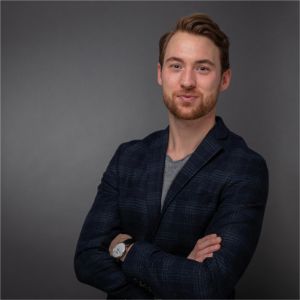
Niklas Best
What are some of the major challenges and trends that have been impacting the Non-Invasive Devices space lately?
First, I’m pleased to see an increasing openness to healthcare systems and payers to reimburse digital therapeutics cost in Europe. It was evident since a while that digital tools have the potential to positively improve patient outcomes, however, the ability to create a successful and scalable commercial model remained a major challenge. While we are just seeing the first steps of healthcare systems to solve this issue, I’m convinced that this trend is only going to accelerate.
Second, and closely related to my first point, I’m excited to see what some call the consumerization of healthcare. For quite some time we just accepted that the experience of healthcare, including its devices or software just feels not nice. Finally, we are seeing this changing. Good human centered design is now a must-have in successful new product developments no matter if the product is made for clinicians or patients.
What keeps you up at night when it comes to some of the major predicaments in the Non-Invasive Devices space?
I strongly believe in a larger shift from the traditional discontinuous chronic care of having 5 to 15mins doctor visits every couple of weeks to a more continuous approach that provides care not when the doctor has time but when the patient needs it. This shift is enabled by digital technologies that allow care to be provided also outside of the outside of the doctor office.
To me, this is going to change large parts how we experience healthcare today. It finally enables a stronger and economically feasible shift towards prevention.
It gives patients the right support to cope with their condition and change their behavior.
"Today we have more live data of the status of our car than of our body but as this is going to change, we will see new business models emerge and eventually better health at lower costs"
Medical devices and medical software will need to fit into this new world. It needs to be easy to use in order to fit into the lives of humans. It cannot put another layer of complexity on to the already busy lives of patients, caregivers or clinicians.
Can you tell us about the latest project that you have been working on and what are some of the technological and process elements that you leveraged to make the project successful?
We are currently working on a novel suite of products that aims to make clinicians working in dialysis more efficient and effective. It is fully cloud based, which radically reduces the burden and costs for clinics needing to manage their own IT and server infrastructure. Eventually, it aims to give clinicians back time to allow doctors and nurses to do what made them choose their profession, which is providing care and not struggling with unnecessary complex software.
Further, we have been introducing our patient app around two years ago and have been continuously iterating the product in bi-weekly cycles every since. The product is now available in our clinics in over 20 countries around the globe and the feedback of patients and clinician is amazing. The product allows patients to get access to their health and dialysis treatment data and empowers them to take action to positively influence their health via their own behavior.
While innovating and moving fast in healthcare is hard, I believe we can still adopt many of the practices of other industries. Thus, to me, the main success factor is next to work iteratively and take a human centered approach. Centering the organization around end-user needs by slicing small dedicated cross-functional products teams consisting of product management, tech and design resources are focused and empowered to make own decisions. This allows to use technologies like artificial intelligence much more effectively, as it shifts the focus away from fancy technology to solving the problem of humans, which I believe is our job, working in healthcare.
Which are some of the technological trends which excite you for the future of the Non-Invasive Devices space?
As I believe in the shift to more continuous care, the ability to measure vital data with wearables that blend seamlessly into the lives of people and receive medical data like blood results in the comfort of our own homes excites me. Today we have more live data of the status of our car than of our body but as this is going to change, we will see new business models emerge and eventually better health at lower costs. Obviously, it’s a longer journey, but I already can’t wait to see things like continuous glucose and blood pressure measurement arriving at my watch as this is going to allow us to tackle one of the largest problems of our times in completely new ways.
The articles from these contributors are based on their personal expertise and viewpoints, and do not necessarily reflect the opinions of their employers or affiliated organizations.
